 |


NEVER BUY ON A WHIM!!!!!!
DON'T BUY FROM A PET SHOP OR PUPPY MILL.
Telephone or email the breeders and ask about the breed. Most will be
happy to answer any questions you might have and will advise you of the
suitability of their breed to your situation. Go and have a look at
several different breeds if you are still not sure which one is right
for you. This can best be achieved by attending an all breed dog show.
This will help you decide which breed you like as well as which
breeders dogs you prefer.
Decide if you want a pet or a show quality pup. This may determine how
long you have to wait and how much you will have to pay - show or
breeding quality pups usually being fewer in number and more expensive.
Have a look at the health of the other dog's in the kennel. Are they
lively alert and friendly. (Don't forget most kennelled dogs will bark
at strangers and some breeds will very rarely look friendly but you can
get a general idea - dogs that look down right viscous might not be
good parents for a pet dog).
Does the kennel look clean and sanitary? Do the dogs react happily to
the owner/handler or do they cringe away snap or growl?
Puppies should be nicely rounded in shape without being overly fat or
skin and bones.
Most healthy pups will have shiny alert eyes and healthy looking coats.
Check that the puppies are not infested with ticks and fleas. Ask to
see both parents. It is common for breeders to use a stud dog that they
do not own but they may have photos of the dog. Quite often the bitch
will not look in 'show condition' after whelping a litter. The reason
for this is that feeding a litter places huge demands on the bitch so
she may be a little thin (but not skin and bones) and may 'blow' her
coat (shed)due to the hormonal changes caused by pregnancy and milk
production. She should however still appear happy lively confident
interact well with the owner/breeder and show no signs of illness.
Ask the breeder if they have any references from people who have bought
their puppies in the past. Make sure that you see all appropriate
paperwork including parents pedigrees medical certificates for tests
such as hip dysplasia if this is relevant to the breed as well as the
puppies pedigree papers and vet certificate confirming worming and
vaccinations. Be very sceptacle of any breeder who is not willing to
show you paperwork - if you are unable to see the papers the breeder
may not actually have them! Many people are not concerned about having
'papers' for their pet however you do want to make sure that if you are
paying the price for a pure bred dog then that is what you are getting.
Also if the breed that you are buying are prone to certain medical
conditions you want to make sure that the parents have been 'cleared'
by a vet and the puppies checked (depending on the relevant
condition)to ensure that there is the smallest chance possible that the
pup you buy will develop the condition.
It is also a good idea to ask to see the membership card for the canine
controlling body (Kennel Council)for the state/country that you are in.
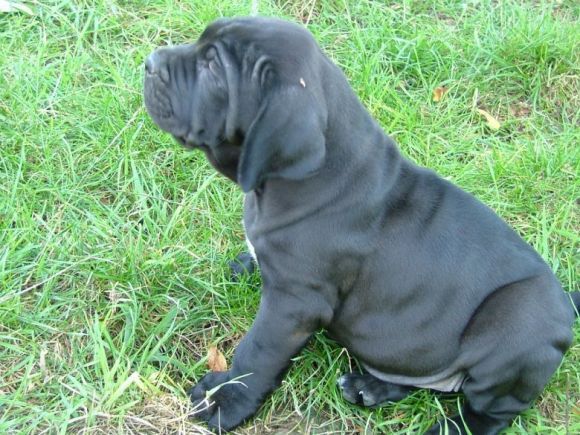
What else should I look for in
a healthy puppy?
Nose:
Nose should be cool and moist and not running. If there is a nasal
discharge or frequent sneezing this may be a sign of a respiratory
tract infection.
Mouth:
Check the teeth and gums. Most breeds have a scissor bite which is when
the upper incisors tightly overlap the lower. Gums should be pink and
healthy looking. Pale gums indicate anemia. The puppy should have clean
smelling breath.
Throat:
Check the back of the throat, enlarged tonsils can mean tonsillitis.
Ears and Eyes:
Eyes should look straight ahead and not deviate to the side. If tear
staining is present on the muzzle look for eyelids that are rolled in
or out, extra eyelashes or conjunctivitis. White spots on the surface
of the eye could be scars from prior injuries or infections. Ears
should stand correctly for the breed. Tips should be healthy and well
furred. Crusty tips with bare spots suggest sarcoptic mange. Ear canal
should be clean, wax free and sweet smelling. A buildup of wax or a
rancid odor may be caused by ear mites. Head shaking and tenderness
about the ear indicates an infection of the ear canal.
Chest:
Feel the chest to see if the heart seems especially vibrant. Puppies
should breathe in and out without effort. A flat chest, when
accompanied by trouble breathing in may indicate an airway obstruction.
Coat and Skin:
Skin and hair around the anus should be clean and healthy looking.
Signs of irritation such as redness or hair loss indicate the
possibility of worms, chronic diarrhea or digestive disorder. Coat
should be bright and shiny. Excess scale or itching in the coat
suggests mites, fleas or other parasites.
Structure:
Legs should be straight and well formed. Structural faults include legs
that are bowed in or out. Gait should be free and smooth. A limp or
faltering gait may be the result of a sprain or hurt pad or hip
dysplasia or other joint condition.
REMEMBER:
It is ultimately your responsibility to research the breeds you are
interested in as well as the individual breeder that you finally
purchase from and while it is your right to ask as many questions as
possible it is also the breeders right (and responsibility) to ask you
questions as well so don't be offended if the breeder gives you the
third degree!